Split screen
Two views at once. Phone calls, parallel stories.
- Starts
- Eye-level medium close-up
- Ends
- Eye-level cowboy shot
- Length
- 5 s
- Pace
- Smooth
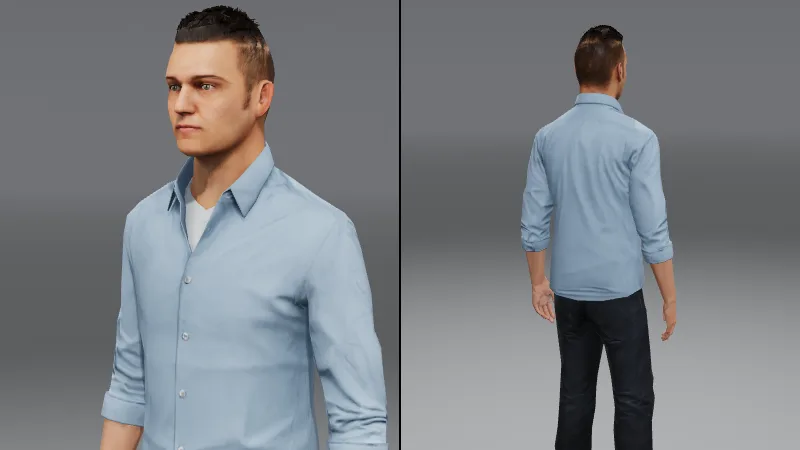
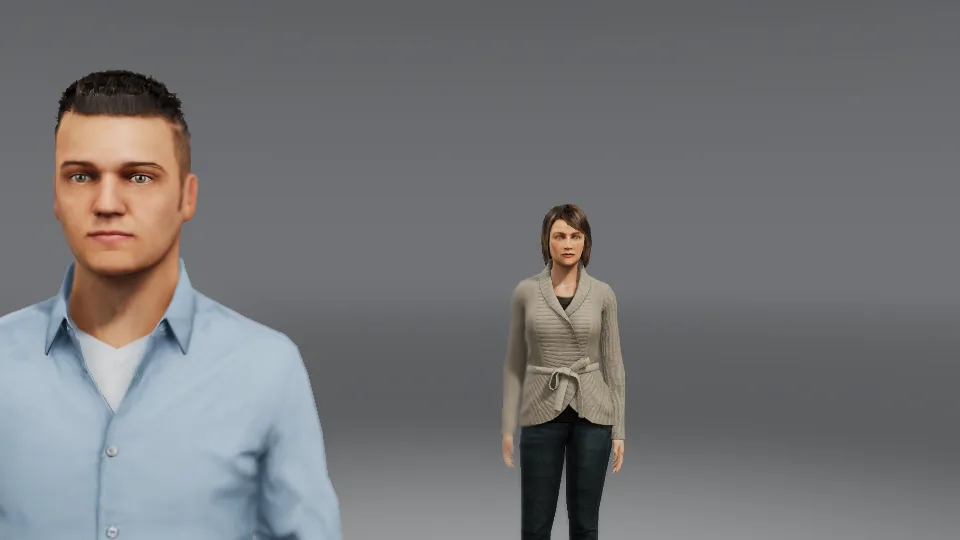
Split screen. The picture is split in two, with the subject from the front on one side and from behind on the other. Starts on an eye-level medium close-up, three-quarter front view on the subject's left, ends on an eye-level cowboy shot, three-quarter back view on the subject's right. Eases in and out over 5 seconds, the subject held in frame.
What it does
Two pictures share the screen, divided by a line that may be vertical, horizontal or slanted. Both can be watched together, so two places, two moments or two angles can be compared without a cut. The parts usually show things that happen at the same time. Conversations by phone are a traditional use.
When to use it
Good pairs are a grandson on a ski lift and a hospital bed, two thieves at different doors, or twins at breakfast on two continents. Sports coverage and heist films also use it for simultaneous action.
Writing the prompt
Describe each half in turn: "split screen, vertical line in the middle, left side a man in a taxi at night, right side a woman in a bright kitchen". Say where each one looks.