Shot / reverse shot
Two people seen in turn, each from the other side. Dialogue, arguments, standoffs.
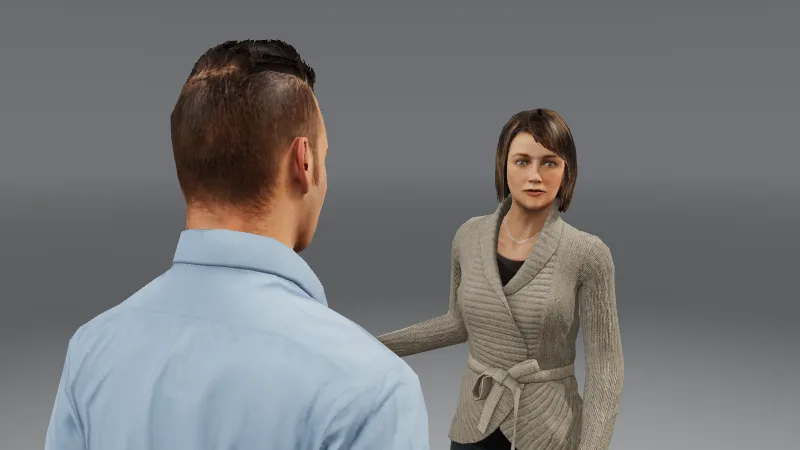
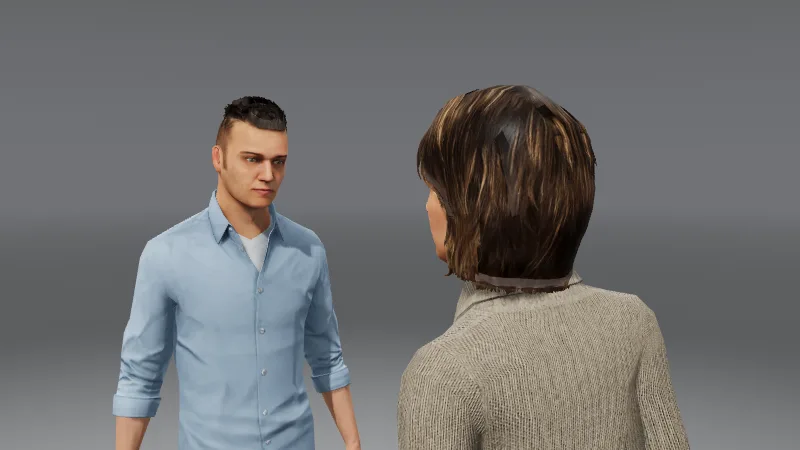 AB
- Made in
- Camera or editing
- Also called
- shot-reverse-shot
What it does
The edit cuts back and forth between two people facing each other, each seen roughly from the other's side, often past the other's shoulder. The cameras stay on one side of the line between them, so one person always looks toward one side of the frame and the other toward the opposite side. It is a pattern rather than a single transition, and the standard way to film a conversation.
When to use it
Use it for dialogue, arguments, interviews and standoffs, where the viewer needs both faces and their reactions. Matching the sizes of the two shots keeps the two people equal; going closer on one of them gives that person the weight.
Writing the prompt
Describe both shots as a pair with the same size and lens: "over-the-shoulder medium close-up of the woman, past the man's right shoulder", then "reverse shot, the same framing of the man past her left shoulder". Kling's prompt guide names shot-reverse-shot among the structures for multi-shot clips.
Easily mixed up with
Shot / reverse shot
Two people seen in turn, each from the other side.
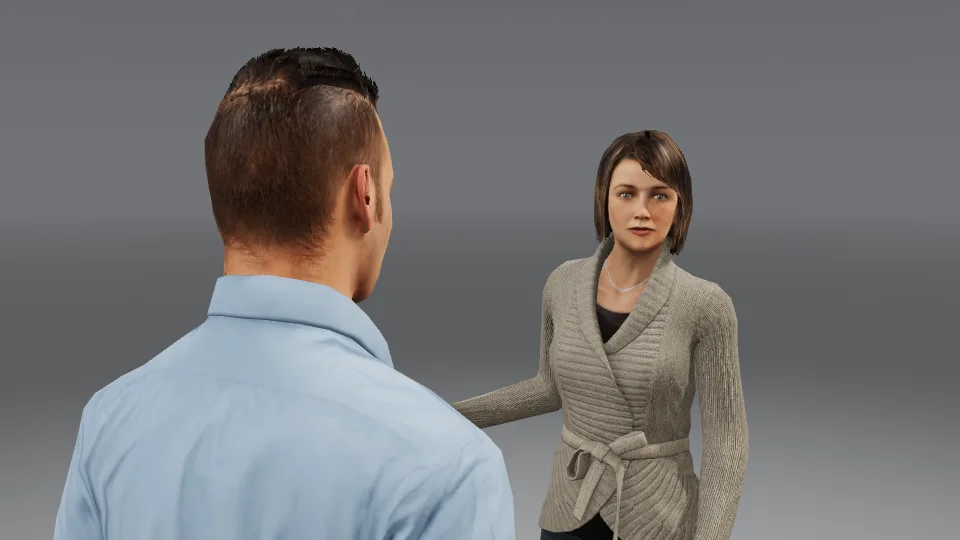
Over the right shoulder
One half of the pair: past one person onto the other.
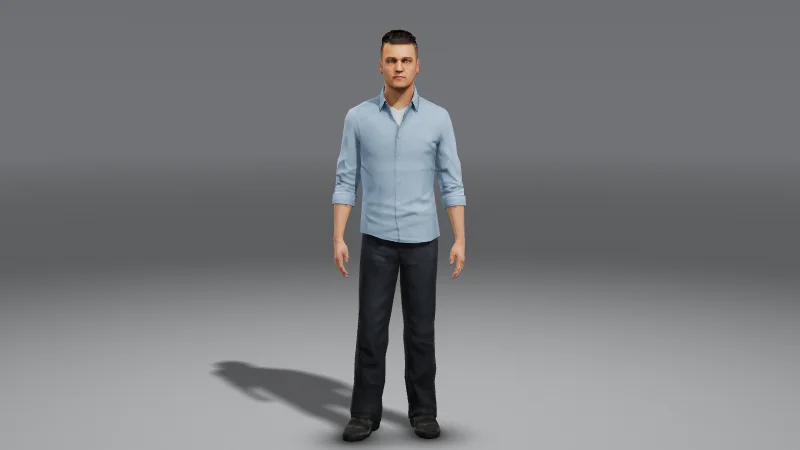
Eyeline match
A single look and what it sees.